

Unit Dose Packaging: Safer, More Accurate Dosing
A practical guide to unit dose and unit-of-use blister packaging
Unit dose and unit-of-use blister formats can protect medication, make dosing schedules easier to follow, and give pharmaceutical manufacturers a scalable platform for clinical and commercial programs.
Overview
- Unit dose packaging separates medication into individually identified doses, while unit-of-use packaging supplies the complete prescribed course in one package.
- Blister materials and seals protect each dose; the paperboard wallet adds instructions, organization, branding, and child-resistant functionality when required.
- Calendarized layouts give patients and caregivers a visible reference for the dosing schedule.
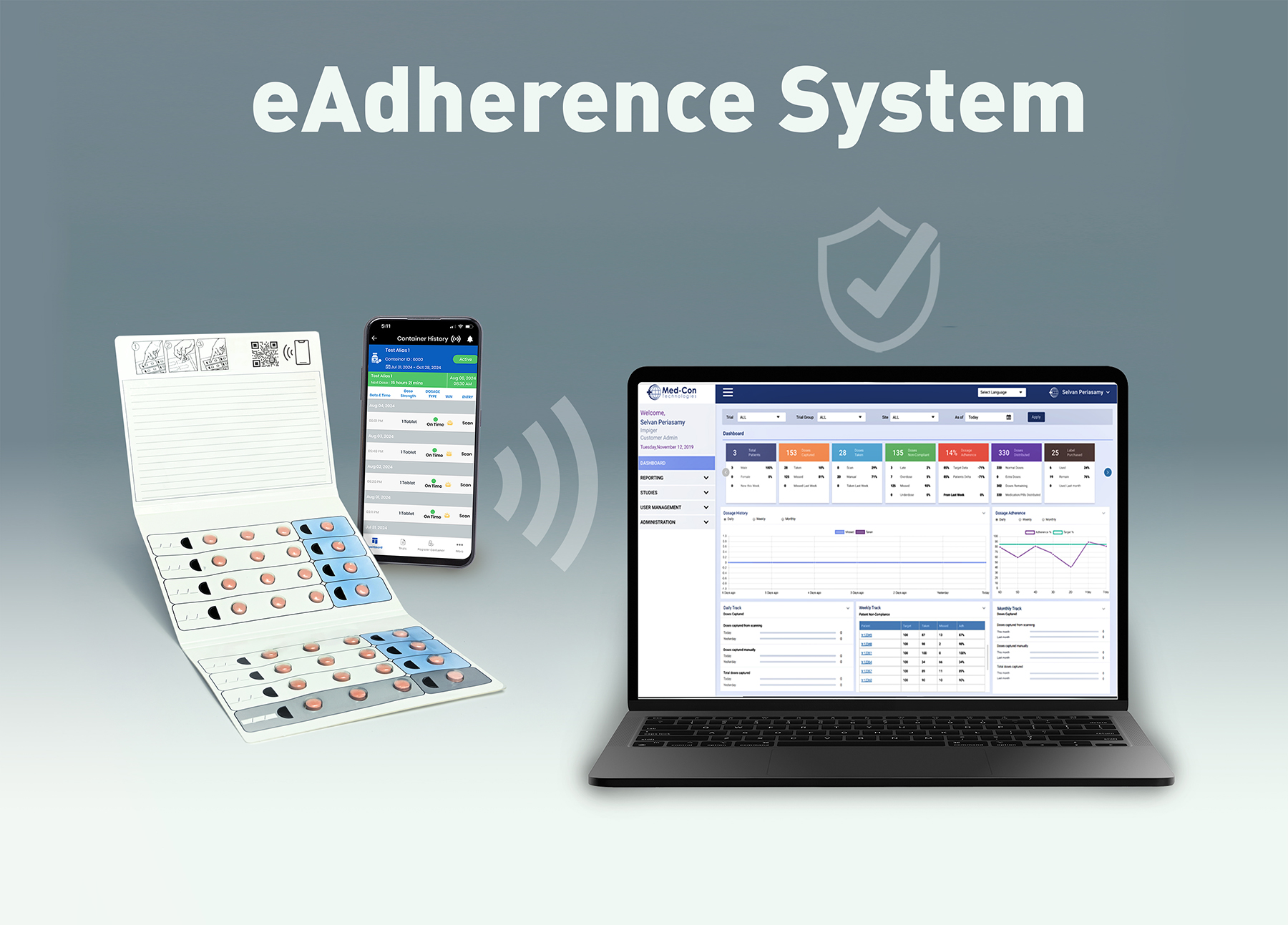
- Electronic adherence monitoring can create a time-stamped record of package openings for appropriately configured clinical studies.
- Related clinical and commercial versions of a packaging platform can reduce redesign work as a product advances toward launch.
A medication can deliver its intended benefit only when the correct dose is available and the patient understands when and how to take it. Packaging cannot ensure that a patient follows a regimen, but it can remove avoidable confusion. By separating doses, organizing them in sequence, and placing instructions beside the medication, unit dose packaging gives patients, caregivers, pharmacists, and study teams a clearer dosing reference than a loose supply of tablets or capsules.
The phrase unit dose packaging is also commonly used when buyers are searching for a complete course of medication in a calendarized blister wallet. The more precise term for that format is often unit-of-use packaging. Keystone Folding Box Co. develops paperboard blister wallets and child-resistant secondary packaging for both needs, including commercial pharmaceutical products and clinical trials.
What Is Unit Dose Packaging?
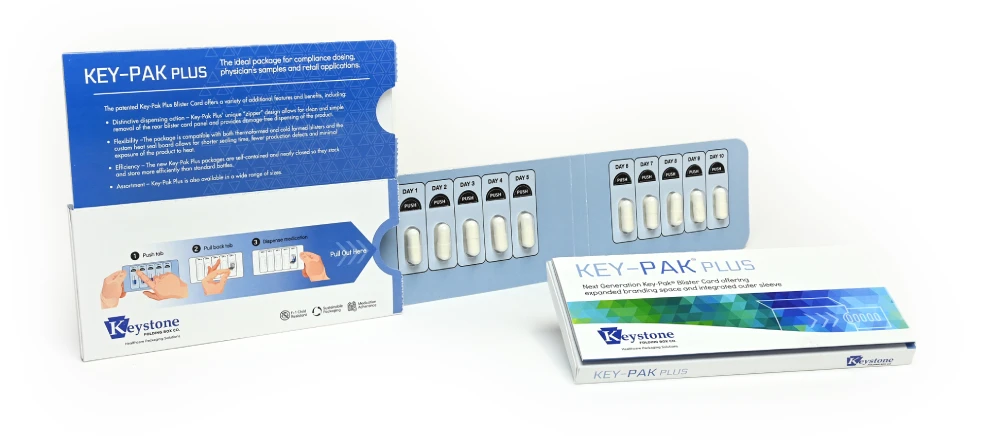
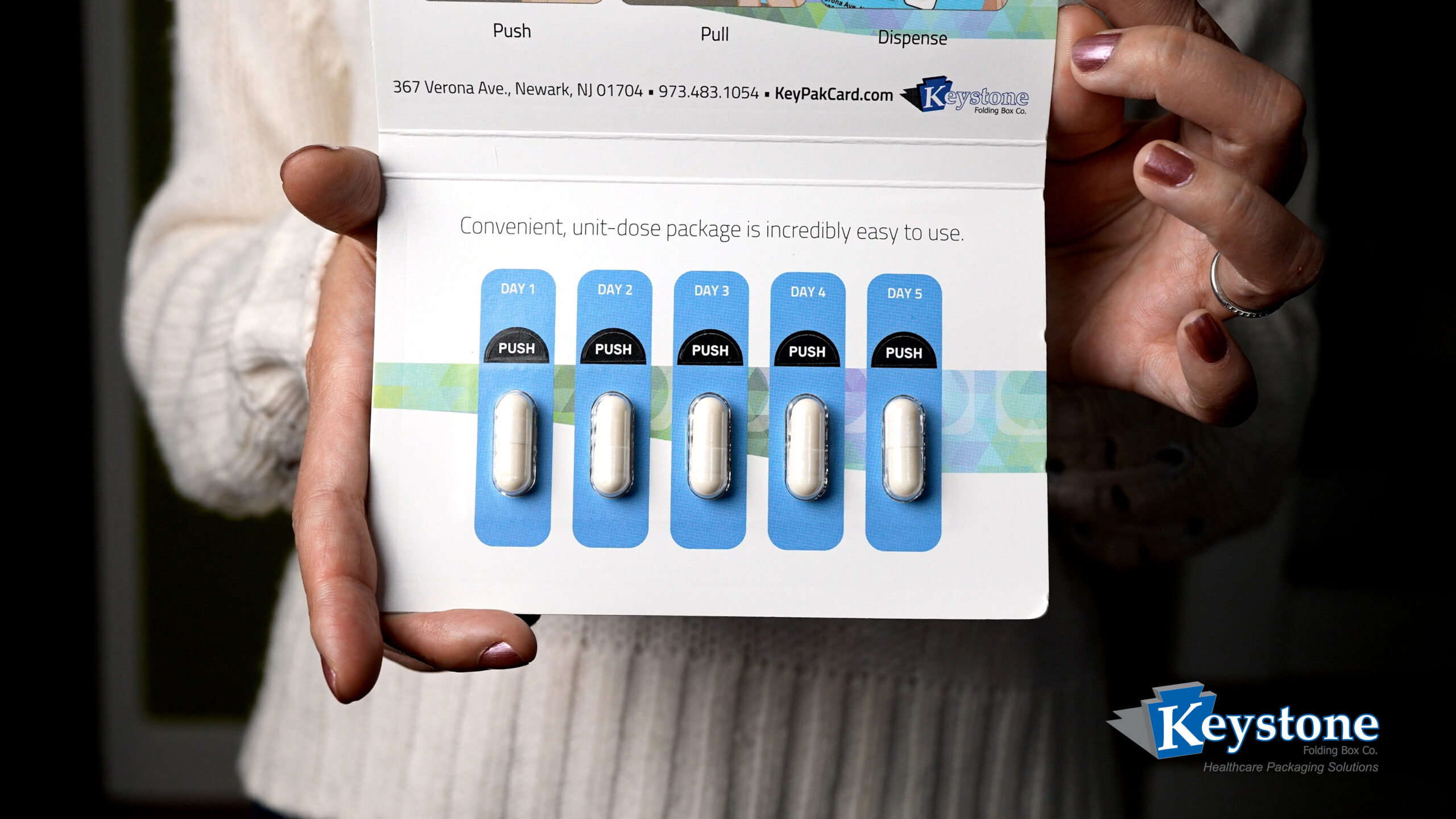
Unit dose packaging presents a medication in discrete, individually identified portions. In a blister format, each tablet or capsule occupies its own formed cavity and is sealed with lidding material until the dose is removed. The blister is the primary package in direct contact with the product.
Protection from moisture, oxygen, light, and contamination depends on the selected forming material, lidding material, seal integrity, and overall package design. These components must be chosen for the drug product’s stability requirements. The surrounding paperboard wallet or card does a different job: it organizes the blister, carries labeling and dosing instructions, provides printable space for branding and regulatory content, and can contribute child-resistant functionality as part of a tested package system.
For pharmaceutical teams, this distinction matters. Effective unit dose packaging is not one material or component. It is an integrated system in which the blister, paperboard structure, graphics, opening features, and manufacturing process work together.
Unit Dose vs. Unit-of-Use Packaging
The terms are related, but they describe different levels of the package.
| Term | Practical meaning |
| Unit dose packaging | Each dose is packaged and identified individually, such as one tablet or capsule in each blister cavity. |
| Unit-of-use packaging | The package contains the complete quantity intended to be dispensed for a defined regimen or course of therapy, such as a 7-day, 14-day, or 30-day blister wallet. |
A calendarized blister wallet may be both unit dose and unit of use: every dose is individually sealed, and the full prescribed course is supplied in one organized package. Buyers may also use terms such as blister card, blister wallet, dose pack, or compliance pack when looking for the same general format.
This language affects package development. A unit dose requirement focuses on the identity and protection of each dose. A unit-of-use requirement also considers the full regimen, the number and sequence of doses, the printable instruction area, pharmacy dispensing workflow, and how the patient carries and uses the package.
Unit Dose Packaging vs. Bottles
Bottles remain appropriate for many products, but they store multiple doses together and usually require the patient to count doses and remember whether a dose has already been taken. A calendarized blister format creates a visible record of which cavities are open and which remain sealed.
That visual structure can support:
- Dosing clarity: Each dose can be associated with a day, time, or sequence.
- Product identification: Printed information remains physically connected to the organized dose presentation.
- Tamper evidence: An opened blister cavity is visibly different from an intact cavity.
- Portability: A defined course of therapy can be supplied in a compact wallet.
- Communication: The paperboard panel provides space for instructions, warnings, diagrams, branding, and regulatory information.
These features support accurate use, but they do not guarantee adherence or prove that a removed dose was swallowed. Package selection should reflect the product, patient population, regimen, distribution environment, and applicable regulatory requirements.
How Calendarized Packaging Supports Dosing Accuracy
Calendarization maps individual cavities to a dosing schedule. A once-daily product might use rows labeled Monday through Sunday. A more complex regimen might identify morning and evening doses, titration stages, or a prescribed sequence.
This arrangement turns the package into a persistent reference. Instead of relying entirely on memory or a separate instruction sheet, the patient can compare the current day or dosing period with the remaining cavities. Caregivers and healthcare professionals can also review the opened and unopened positions when discussing medication use.
Clear graphics are essential. Day labels, dose numbers, arrows, warnings, and opening instructions must work with the package structure rather than compete for attention. Keystone’s paperboard formats provide a large printable area that can keep this information attached to the medication throughout use.
Child-Resistant Unit Dose Packaging
Some pharmaceutical products require child-resistant packaging. In a blister wallet, child resistance must be evaluated as a complete system—not assumed from the paperboard structure or blister alone. The opening sequence, locking feature, blister access, materials, dimensions, and manufacturing tolerances all contribute to performance.
Keystone offers tested child-resistant platforms, including the Key-Pak F1 Wallet Card and the EcoSlide-Rx Reclosable CR Pack. Both can combine individually blistered doses with space for instructions and product information. The appropriate platform depends on the blister configuration, dose count, patient population, desired opening experience, manufacturing method, and program requirements.
F=1 child-resistant performance applies to a specific tested package configuration. Changes to materials, dimensions, blister placement, locking features, or assembly may require technical review and testing. Early collaboration helps the package team select a platform that can meet product, patient, compliance, and production needs together.
Unit Dose Packaging in Clinical Trials
Clinical trials place unusual demands on packaging. Participants must understand the protocol, study teams must preserve product identity and blinding where required, and sponsors need reliable methods for assessing how the investigational product was used.
Calendarized unit dose or unit-of-use packaging can support a study by:
- organizing doses according to the protocol;
- keeping instructions beside the medication;
- making returned-package review easier;
- accommodating visit periods, titration schedules, or multiple dosing times; and
- providing a platform for optional electronic adherence monitoring.
The Key-Pak F1 Wallet Card provides a substantial printable area for protocol-specific instructions and patient-facing graphics. The EcoSlide-Rx Reclosable CR Pack offers a reclosable child-resistant format that can be adapted to different blister layouts and dose counts. Package configuration should be developed and qualified for the individual study rather than treated as universal.
Electronic Medication-Adherence Monitoring
For selected clinical programs, a blister package can incorporate electronic monitoring technology. A sensor grid associated with the blister records an event when a cavity is opened. Depending on the configured system, the record can identify the date and time of the event and the dose position within the package—for example, the cavity assigned to Day 4, Evening.
The resulting time-stamped package-opening history provides a more objective record than participant recall alone. It can help study teams identify dosing patterns, missed openings, delayed openings, or unexpected sequences. Data retrieval and reporting frequency depend on the selected device, reader, communications method, and study design; not every configuration transmits data continuously or in real time.
Electronic monitoring also has an important limitation: opening a cavity does not prove that the patient ingested the medication. The data should be interpreted as a record of package interaction and combined with the study’s broader adherence-assessment strategy.
Keystone has collaborated with Information Mediary Corporation to integrate electronic compliance-monitoring technology into blister-wallet formats. Planning this capability early allows the electronics, blister layout, paperboard structure, graphics, assembly process, data workflow, and patient instructions to be developed as one system.
Clinical-to-Commercial Packaging Options
Packaging selected for a clinical trial can influence later commercialization. Moving to a completely different format may require new structural design, artwork, equipment setup, line trials, qualification work, stability assessment, and supply-chain planning.
Using related clinical and commercial versions of the same underlying platform can reduce unnecessary change. It does not mean the exact clinical pack automatically becomes the commercial pack. Commercial artwork, labeling, quantities, materials, equipment, validation, and regulatory requirements may differ. The advantage is that teams can build on a familiar package architecture instead of beginning again with an unrelated format.
Keystone develops clinical and commercial versions of its paperboard blister-wallet platforms. When the product and program allow, that continuity can support a more predictable transition by preserving established design principles, opening logic, dose organization, and manufacturing knowledge.
Choosing the Right Unit Dose Format
The right format begins with the drug product and the people who will use, fill, distribute, and administer it. A packaging discussion should address:
- dose form, dimensions, count, and regimen;
- required moisture, oxygen, and light barrier;
- child-resistant and senior-friendly objectives;
- clinical or commercial labeling requirements;
- patient instructions and available printable area;
- blister forming and sealing capabilities;
- cartoning, wallet assembly, and automation requirements;
- distribution testing and package integrity;
- clinical-to-commercial scale; and
- optional adherence-monitoring technology.
Keystone can help pharmaceutical companies, clinical-packaging organizations, and CDMOs evaluate paperboard blister wallets for these requirements. The result is a package designed as an integrated system—one that protects the blister, communicates the regimen, supports manufacturability, and fits the intended stage of the product lifecycle.
Connect with the Keystone team to discuss a unit dose or unit-of-use packaging format for a clinical or commercial program.
Frequently Asked Questions
What is unit dose packaging?
Unit dose packaging separates medication into individually identified portions. In a blister package, each tablet or capsule is placed in its own formed cavity and sealed with lidding material until use.
What is the difference between unit dose and unit-of-use packaging?
Unit dose describes the individually packaged dose. Unit of use describes a package containing the complete quantity intended for a defined regimen or course of therapy. A calendarized blister wallet can meet both descriptions.
Is a blister card the same as unit dose packaging?
A blister card is one common unit dose format. The blister provides the primary sealed cavities, while an attached or surrounding paperboard card or wallet can organize the doses and carry instructions, labeling, branding, and child-resistant features.
How can unit dose packaging support medication adherence?
Separating and calendarizing doses gives patients a visible reference for what should be taken and when. An opened cavity can indicate package use, but packaging alone does not prove adherence or ingestion.
Can unit dose packaging be child-resistant?
Yes. Child-resistant blister wallets are available, but performance applies to the tested package system and configuration. Materials, dimensions, blister placement, locking features, and manufacturing tolerances must be considered together.
Can the same package be used for clinical trials and commercial products?
Related clinical and commercial versions of the same packaging platform may be used, reducing the need to shift to an unrelated design. The finished commercial package still requires its own artwork, specifications, qualification, validation, and regulatory review.
What does electronic monitoring record in a blister package?
Depending on the system configuration, it can record the date and time a cavity is opened and identify the dose position within the package. This is a record of package interaction, not proof that the medication was ingested.
Latest Articles
While Keystone continues to be a leader in the manufacturing and design of paperboard packaging, they are also a design center and source for non-paperboard packaging components. To learn more about Keystone Folding Box Company, please contact Ward Smith at Keystone Folding Box Company, at (513) 871-4747, ward.smith@keyboxco.com or visit www.keyboxco.com.