

How Material Selection Impacts Pharmaceutical Packaging Performance
Why paperboard substrate selection matters for child-resistant packaging, compliance, automation, and patient usability.
TL;DR:
- Material selection is a strategic performance decision, not just a design choice, directly affecting protection, child resistance, print quality, automation, and patient usability.
- Engineered paperboard substrates support barrier protection against moisture, light, and oxygen while keeping packaging manufacturable and scalable.
- Surface consistency and material properties drive reliable serialization printing and F=1 child-resistant performance without sacrificing senior-friendly access.
- Paperboard-based systems like Ecoslide-RX® and Key-Pak® reduce outer plastic usage and support sustainability while staying compatible with required blister films and high-speed automation.
Why Material Selection Matters in Pharmaceutical Packaging
Pharmaceutical packaging performance is often associated with package structure and format, but the packaging material itself plays a critical role in how a system performs in real-world conditions.
In regulated pharmaceutical environments, material selection directly impacts product protection, child resistance, print quality, durability, automation efficiency, sustainability, and patient usability. For commercial pharmaceutical packaging applications, selecting the right substrate is not simply a design consideration — it is a strategic performance decision.
Keystone Folding Box Co., a U.S.-based pharmaceutical packaging manufacturer with decades of experience in regulated healthcare packaging, develops paperboard packaging systems engineered specifically for commercial pharmaceutical, clinical trial, OTC, and healthcare applications.
Barrier Protection and Product Stability
Packaging materials significantly influence how well pharmaceutical products are protected throughout manufacturing, distribution, storage, and patient use.
High-performance paperboard substrates can be engineered with specialized coatings and surface treatments to support protection against moisture, light exposure, and oxygen transfer. This is especially important for oral solid dose (OSD) medications, unit-dose blister packaging, and sensitive pharmaceutical products requiring stability support.
Unlike overly complex packaging systems that may increase cost and operational inefficiency, properly engineered paperboard packaging systems can provide strong protection while maintaining manufacturability and scalability.
Print Quality, Serialization, and Regulatory Compliance
Pharmaceutical packaging materials must support high-resolution printing for critical information such as:
- Serialization codes
- Variable data printing
- Lot and expiration information
- Dosing instructions
- Barcodes and 2D codes
- Regulatory labeling
Superior surface consistency helps maintain print clarity, reduce defects, and support high-speed pharmaceutical packaging operations.
Reliable print performance is essential for FDA compliance, global serialization requirements, patient safety, and brand integrity within regulated pharmaceutical environments.
Material Performance in Child-Resistant Packaging
Material properties directly influence the effectiveness and consistency of child-resistant (CR) packaging systems.
In child-resistant blister packaging applications, paperboard stiffness, fold integrity, tear resistance, and surface characteristics all contribute to package functionality and regulatory performance.
This balance between safety and accessibility is critical for commercial pharmaceutical packaging intended for real-world patient use.
Durability and High-Speed Packaging Line Performance
Pharmaceutical packaging materials must perform consistently across automated filling, cartoning, and blister packaging operations.
Premium paperboard substrates provide:
- Structural stability
- Reliable fold performance
- Tear resistance
- Consistent feeding on high-speed lines
- Compatibility with automated cartoning systems
Material inconsistency can negatively impact line efficiency, increase waste, and create packaging defects during commercial-scale production.
Medication Adherence and Patient Experience
Packaging performance extends beyond regulatory compliance and product protection. Material selection also affects how patients interact with pharmaceutical packaging throughout treatment.
Factors such as opening behavior, structural consistency, readability, and tactile performance all influence patient usability and medication adherence.
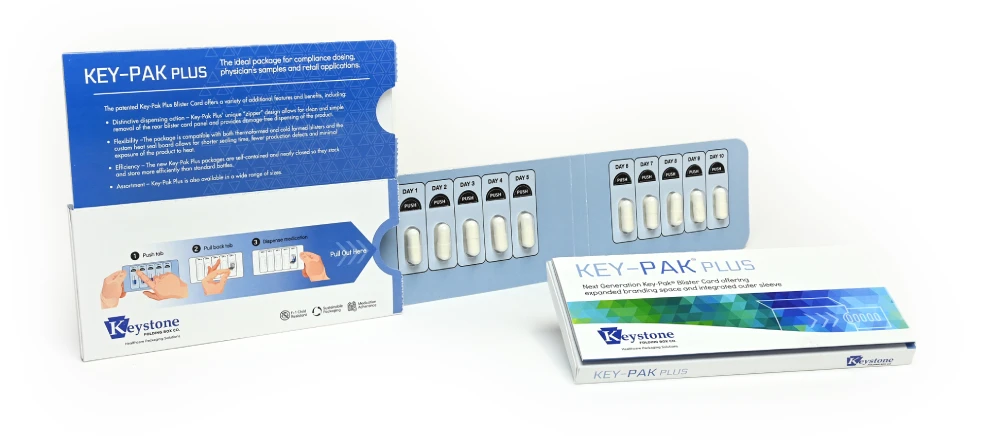
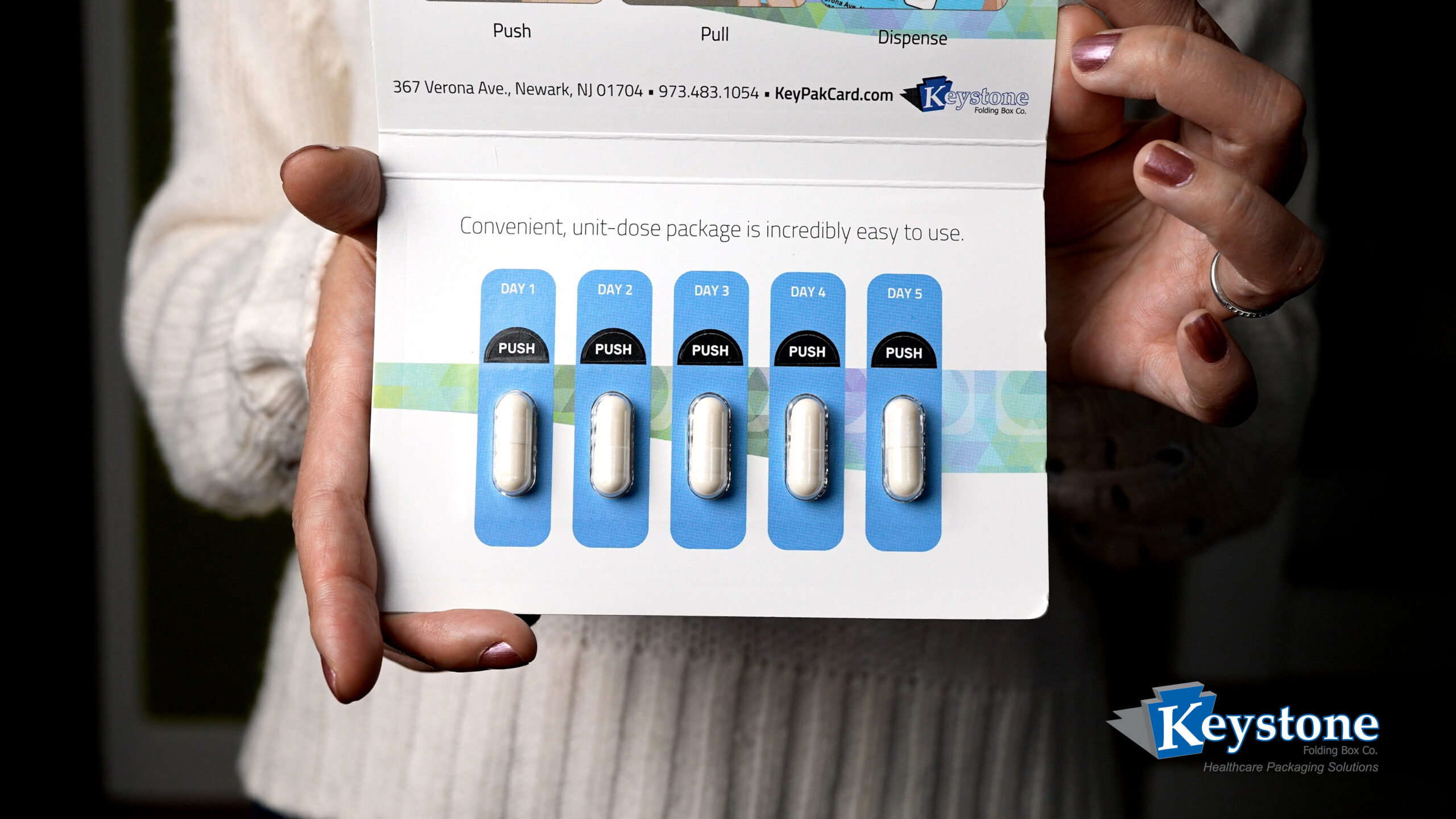
Well-designed paperboard blister wallet systems can improve dosing clarity, reduce user frustration, and support adherence in multi-dose and complex treatment regimens.
Sustainability in Pharmaceutical Packaging
Sustainability continues to become increasingly important within pharmaceutical packaging supply chains.
Paperboard-based pharmaceutical packaging systems may help reduce overall plastic usage while supporting recyclability and material efficiency.
Keystone’s Ecoslide-RX® and Key-Pak® packaging systems are designed to minimize unnecessary plastic within the outer packaging structure while remaining compatible with required blister films and foil barriers.
This system-level approach helps support sustainability goals without compromising compliance, automation compatibility, or packaging performance.
Keystone’s System-Based Packaging Approach
At Keystone, material selection is integrated into a broader pharmaceutical packaging system design strategy.
Rather than treating paperboard as an isolated component, Keystone evaluates substrate performance within complete packaging systems such as:
Packaging materials are evaluated based on:
- Child-resistant performance
- Compatibility with thermoformed and cold-formed blister components
- Serialization and print requirements
- High-speed automation compatibility
- Product protection requirements
- Sustainability objectives
- Real-world patient usability
This system-level approach helps ensure pharmaceutical packaging solutions meet commercial manufacturing requirements, regulatory expectations, and patient-use demands simultaneously.
Why Pharmaceutical Companies Choose Keystone
Pharmaceutical companies worldwide rely on Keystone Folding Box Co. for regulated pharmaceutical packaging solutions designed for compliance, scalability, automation, and patient usability.
Keystone has extensive experience supporting:
- Commercial pharmaceutical packaging
- Child-resistant blister packaging
- Clinical trial packaging
- Oral solid dose (OSD) packaging
- OTC healthcare packaging
- Pharmaceutical wallet packaging systems
- High-speed packaging automation environments
Keystone packaging systems are developed specifically for regulated pharmaceutical applications requiring proven performance, reliable manufacturing execution, and real-world usability.
Frequently Asked Questions
Q. What materials are commonly used in pharmaceutical packaging?
A. Common pharmaceutical packaging materials include paperboard, foil, plastic films, thermoformed blister materials, cold-form materials, and specialized coated substrates designed for protection and compliance.
Q. Why is paperboard used in child-resistant packaging?
A. Paperboard provides structural strength, fold integrity, printability, and sustainability advantages that make it highly effective for child-resistant pharmaceutical blister wallet systems.
Q. How does packaging material affect medication stability?
A. Packaging materials influence protection against moisture, oxygen, light, and physical damage, all of which may impact pharmaceutical product stability.
Q. What is F=1 child-resistant packaging?
A. F=1 refers to child-resistant packaging performance standards established under CPSC testing protocols for regulated pharmaceutical packaging.
Ready to Discuss Your Pharmaceutical Packaging Project?
Keystone Folding Box Co. develops pharmaceutical packaging systems engineered for child resistance, automation compatibility, serialization, sustainability, compliance, and patient usability.
Contact the Keystone team to discuss your commercial pharmaceutical packaging requirements or request samples of Key-Pak®, Ecoslide-RX®, and other Keystone packaging platforms.
Latest Articles
While Keystone continues to be a leader in the manufacturing and design of paperboard packaging, they are also a design center and source for non-paperboard packaging components. To learn more about Keystone Folding Box Company, please contact Ward Smith at Keystone Folding Box Company, at (513) 871-4747, ward.smith@keyboxco.com or visit www.keyboxco.com.