

Child Resistant Pharmaceutical Packaging That Scales Across Formats
Child resistant (CR) pharmaceutical packaging plays a critical role in protecting patients, meeting regulatory obligations, and supporting brand trust. While consumers often view these protections as standard, pharmaceutical and OTC brands understand that child resistant packaging decisions directly affect compliance outcomes, user experience, and long-term product viability.
An effective child resistant pharmaceutical packaging solution must prevent accidental ingestion without creating barriers for legitimate users, including seniors and individuals with limited dexterity. Achieving this balance requires structural precision, proven testing, and manufacturing consistency across formats and production runs.
As a leader in pharmaceutical packaging and an expert in child resistant carton systems, Keystone has delivered high-quality folding carton solutions to the healthcare industry for more than a century. Keystone’s approach combines regulatory compliance, user-centered design, and proven child resistance performance, including F=1 child resistance ratings, to help protect patients and the brands that serve them.
Packaging Built to Meet Global Regulatory Expectations
Child resistant pharmaceutical packaging operates within one of the most heavily regulated environments in packaging. Performance is evaluated not only at product launch, but throughout the entire product lifecycle, requiring consistent results during testing, distribution, storage, and everyday patient use.
Keystone designs child resistant packaging systems to meet the stringent requirements established by regulatory authorities including the FDA, CPSC, EMA, Health Canada and other global agencies. Regulatory considerations are incorporated from the earliest stages of development, reducing risk during validation, submission, and commercialization.
As product portfolios expand, regulatory expectations do not reset. Packaging systems must continue to perform as sizes, formats, graphics, or regional variants change. Structural designs that preserve consistent opening sequences and child resistant logic allow brands to extend product lines without compromising compliance or triggering unnecessary redevelopment.
Structural Design That Drives Child Resistance
In carton-based systems, child resistance is achieved through intentional structural design rather than add-on features. Panel sequencing, access orientation, and controlled motion determine whether a package resists child interaction while remaining usable for adults.
Effective child resistant carton structures rely on deliberate, repeatable actions such as sliding, squeezing, or coordinated push-and-release motions. These mechanisms are engineered to perform consistently across large production volumes without requiring excessive force or tight tolerances that could compromise usability or manufacturing repeatability.
Blister Integration Without Launch Delays
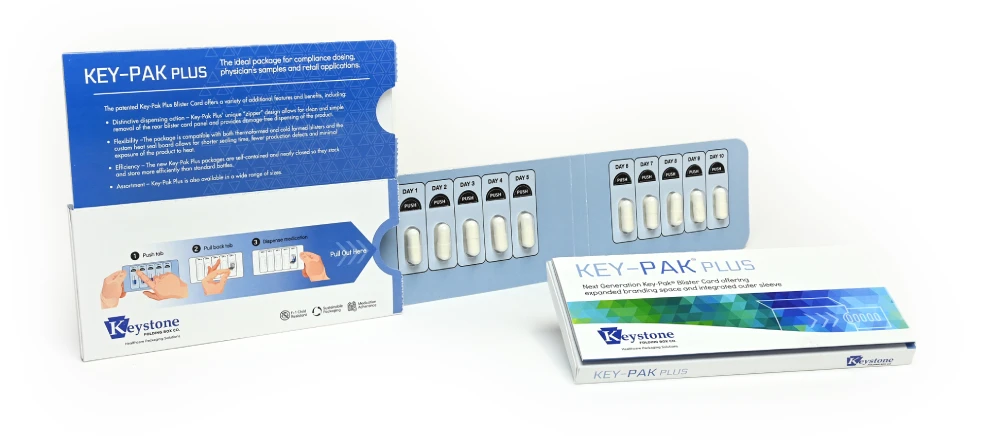
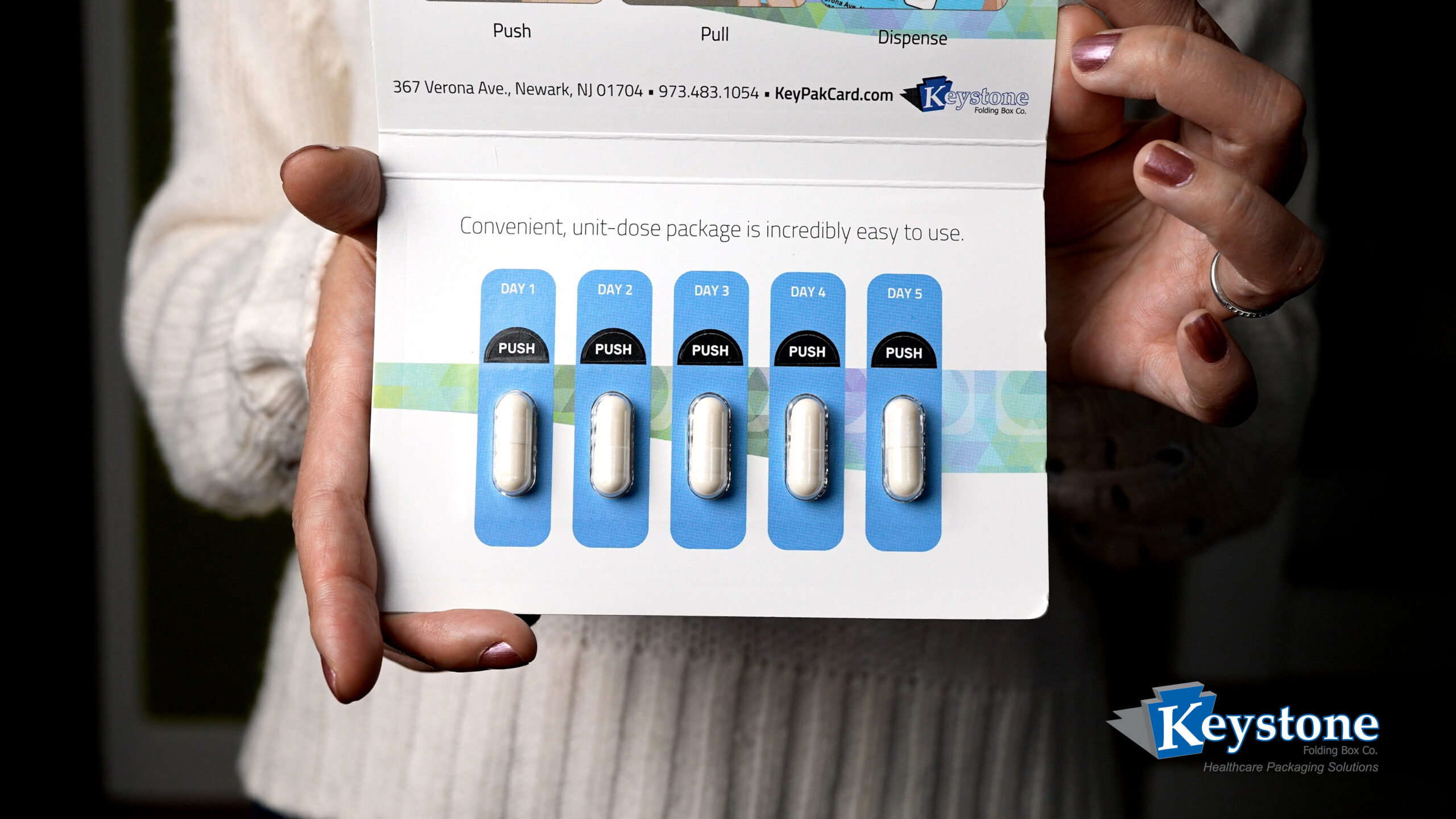
Paperboard blister formats are a core component of Keystone’s child resistant pharmaceutical packaging capabilities and require a different structural approach than traditional plastic blister cards or secondary cartons. Because the blister and carton function as a single system, child resistance must be engineered into the structure itself rather than added later.
Formats such as Keystone’s Key-Pak integrate paperboard blister construction with controlled opening sequences. This makes precise alignment between cavity layout, retention strength, and carton access points critical. When engineered correctly, this integration preserves child resistance through filling, sealing, distribution, and repeated patient use, while avoiding late-stage structural changes that can delay launches or disrupt validation.
Designed to Support Portfolio Expansion
As pharmaceutical and OTC portfolios grow, child resistant packaging systems must adapt without reintroducing compliance risk. Changes in count size, dosage configuration, or regional labeling should not require a complete redesign of the child resistant mechanism.
Structural consistency enables brands to extend formats while maintaining the same opening logic and performance profile. This approach supports faster line extensions, clearer regulatory documentation, and greater confidence as products enter new markets or scale globally.
Protecting Brand Trust at Every Stage
Keystone develops child resistant pharmaceutical packaging with repeatability, durability, and long-term performance in mind. The result is packaging that protects patients, supports regulatory compliance, and helps brands maintain momentum from launch through sustained commercialization.
To explore child resistant pharmaceutical packaging strategies tailored to your product portfolio, connect with the Keystone team.
Latest Articles
While Keystone continues to be a leader in the manufacturing and design of paperboard packaging, they are also a design center and source for non-paperboard packaging components. To learn more about Keystone Folding Box Company, please contact Ward Smith at Keystone Folding Box Company, at (513) 871-4747, ward.smith@keyboxco.com or visit www.keyboxco.com.