

Blister Packaging Design: Key Considerations for Pharmaceutical Products
Summary
- Blister packaging design brings together dose presentation, package structure, patient access, product information, and the intended pharmaceutical application.
- The blister and surrounding paperboard package serve different functions and should be considered together when developing the finished package.
- Child-resistant requirements, dosing schedules, package size, and printable space can all influence the final blister packaging design.
- Keystone develops paperboard blister packaging platforms for pharmaceutical applications, including Key-Pak, Key-Pak Plus, Push-Pak, and EcoSlide-Rx.
Blister packaging design requires pharmaceutical manufacturers to consider many factors that can influence how individual doses are arranged and how the finished package is structured for use.
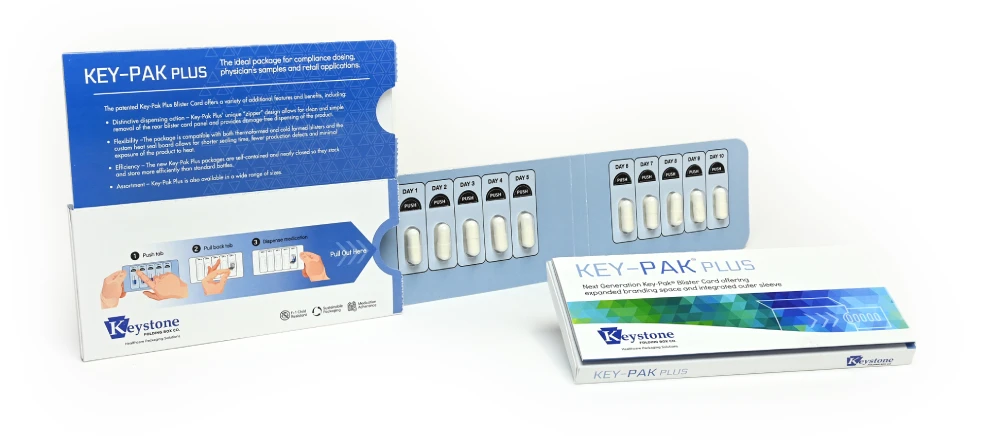
The blister itself and the surrounding paperboard package can serve different purposes. Individual blister cavities can separate and protect doses, while a paperboard card or wallet can organize the doses, provide space for instructions and product information, and incorporate additional packaging features when required.
For pharmaceutical companies, the right design depends on the product, dosing regimen, patient population, packaging requirements, and intended market. Keystone’s has spent over a century cultivating a culture of excellence and innovation that we’ve applied to our developed paperboard blister packaging solutions for pharmaceutical applications, including child-resistant formats and packaging designed for both clinical and commercial use.
What Goes Into Blister Packaging Design?
A pharmaceutical blister package brings several components and requirements together into one finished format. The design needs to account for the medication itself as well as the way the package will be handled, distributed, opened, and used.
Important considerations can include:
- Dosage form and product dimensions
- Number of doses
- Dosing schedule
- Blister configuration
- Package size
- Patient access
- Child-resistant requirements
- Product information and labeling
- Printable surface area
- Clinical or commercial application
- Manufacturing and assembly requirements
These considerations are connected. A change to the number of doses can affect the blister arrangement and overall package size. A child-resistant requirement can influence the opening mechanism. A complex dosing schedule may require additional organization and instructions.
Considering these factors together helps pharmaceutical manufacturers develop a package around the product and its intended use.
Blister Configuration and Dose Presentation
One of the first considerations in blister packaging design is how individual doses will be arranged. A simple dosing regimen may require a straightforward row or grouping of cavities. More complex products may require multiple doses per day, titration schedules, calendarized layouts, or other forms of organization.
The package can therefore be designed around the regimen rather than treating every blister as the same format.
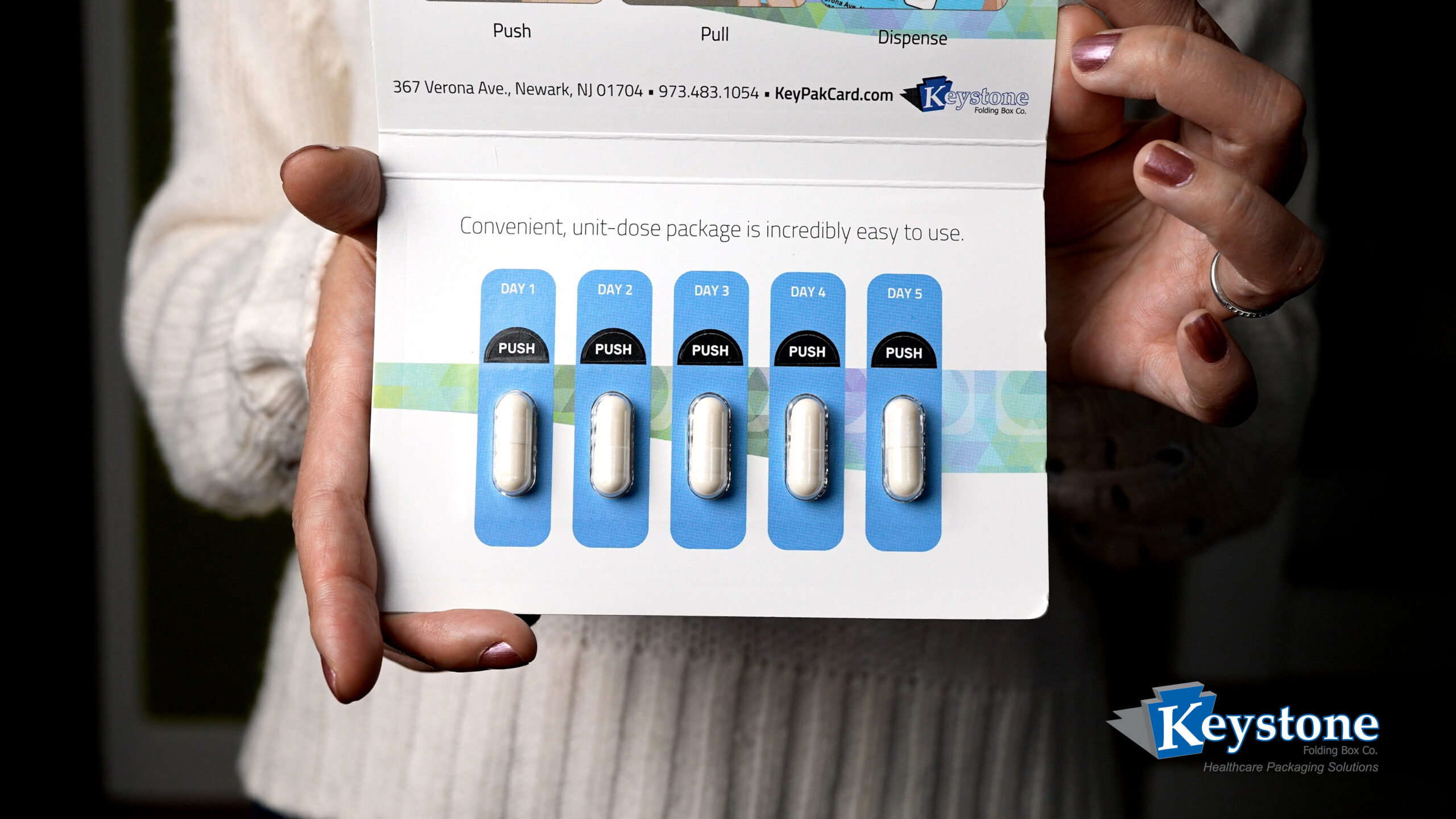
Calendarized blister packaging can associate individual doses with specific days or stages of a treatment schedule. This gives patients and caregivers a visual reference for the medication regimen and can make the package easier to follow. The number of cavities also affects the finished package. A seven-day regimen, for example, may require a different layout from a 30-day supply or a multi-stage titration pack.
Keystone’s Key-Pak is designed to accommodate different pharmaceutical dosing requirements, including standard tablets and capsules, challenging dosage forms, titration regimens, and multi-pill dosing. Its paperboard format also provides space for instructions and other product information.
Design Around Patient Access
Pharmaceutical packaging ultimately needs to work for the people who use it.
Patients may need to identify a specific dose, follow instructions, open the package, remove the medication, and determine which doses remain. These interactions can influence the layout and functionality of the finished package.
The opening sequence should be understandable and appropriate for the intended user. Instructions need to be positioned where they can be easily referenced. Dose organization should support the way the medication is intended to be taken.
These considerations become particularly important when packaging needs to serve different user requirements. A package may need to provide resistance to access by children while remaining reasonably accessible to adults, including older patients.
Designing around patient access from the beginning can help ensure that functionality and presentation work together.
Child-Resistant and Senior-Friendly Considerations
Some pharmaceutical products require packaging that limits access by children while remaining practical for the intended adult user. This requirement can influence the package structure, opening mechanism, blister configuration, and overall user experience.
The specific package design should be evaluated as a complete system and tested according to the requirements of the application. Factors such as the opening sequence, locking features, package dimensions, and blister placement can all affect how the finished package performs.
For pharmaceutical manufacturers, child-resistant packaging should be considered early in the design process so the required functionality can be incorporated into the overall package rather than addressed after the structure has been established.
Make Room for Product Information
Pharmaceutical packaging often needs to communicate a significant amount of information in a limited physical space.
Depending on the product and market, packaging may need to accommodate:
- Product identification
- Dosage information
- Directions for use
- Warnings
- Expiration information
- Lot or batch information
- Manufacturer information
- Regulatory information
- Patient instructions
The physical package needs to provide enough usable space for this information without making the design difficult to understand.
This is one area where the paperboard component of a blister package can provide additional flexibility. A card or wallet surrounding the blister can provide printable areas for instructions, graphics, branding, and other required information. The goal is to make the information part of the package design rather than treating labeling as something added after the structure has already been determined.
Choosing the Right Blister Format
The blister itself can be produced in different formats, and the appropriate approach depends on the product and packaging requirements.
Thermoformed and cold-formed blisters use different forming processes and materials. The choice can affect the resulting package structure, cavity characteristics, material selection, and manufacturing process.
The right option depends on factors such as:
- Product dimensions
- Dosage form
- Required package characteristics
- Product protection requirements
- Production considerations
- Overall package design
There is no single blister format that applies to every pharmaceutical product. The packaging approach needs to be evaluated against the requirements of the specific product and application.
Consider the Overall Package Footprint
Package dimensions can influence storage, transportation, handling, dispensing, and the patient’s experience.
The number and arrangement of blister cavities naturally affect the overall size of the package. The surrounding paperboard structure also needs to accommodate the blister, required information, and opening features.
For some applications, a compact format may be particularly valuable. A smaller package can make a treatment regimen easier to carry and may simplify storage and handling. Package footprint should ultimately be considered alongside dose count, information requirements, patient access, and the needs of the distribution environment.
Design for the Intended Pharmaceutical Application
The requirements for a blister package can change depending on where and how the product will be used.
Commercial pharmaceutical products may require established branding, market-specific labeling, serialization, and production volumes. Clinical-trial packaging may need to accommodate study-specific instructions, blinding, randomization, visit schedules, or other protocol requirements.
The package format may also need to support different dosing schedules or patient populations.
This makes the intended application an important part of blister packaging design. A format that works well for one pharmaceutical program may not be appropriate for another without modification.
Keystone supports both clinical-trial and commercial pharmaceutical packaging applications, giving manufacturers options for blister-based paperboard packaging across different stages of the product lifecycle.
Consider the Package as a Complete System
The blister is only one component of the finished pharmaceutical package.
A successful package needs the blister, paperboard structure, opening mechanism, labeling, dose organization, and manufacturing process to work together. Designing these elements independently can create problems when they are brought together later in development.
For example, adding additional product information may affect the available printable area. Increasing the dose count may change the package footprint. Adding child-resistant functionality may influence the opening sequence. A change in blister configuration may affect the surrounding paperboard structure.
Considering these relationships early gives pharmaceutical manufacturers a clearer view of the finished package and the decisions that need to be made during development.
A Practical Blister Packaging Design Checklist
Before selecting or developing a blister packaging format, pharmaceutical teams should consider:
- What dosage form is being packaged?
- How many doses will the package contain?
- What is the dosing schedule?
- Does the package need calendarization?
- Who will use the package?
- Are child-resistant requirements applicable?
- How accessible does the package need to be for the intended users?
- What product and regulatory information needs to appear on the package?
- How much printable space is required?
- What blister format is appropriate?
- What package footprint is practical?
- Is the package intended for clinical or commercial use?
- What manufacturing and assembly requirements need to be considered?
- Will the package need to accommodate future configuration changes?
These questions help connect the individual design decisions to the requirements of the finished pharmaceutical package.
Selecting a Blister Packaging Solution
Blister packaging design begins with understanding the product and the people who will use it. Dose configuration, package size, patient access, product information, child-resistant requirements, and the intended pharmaceutical application can all influence the final format.
The blister and surrounding paperboard package should be evaluated together so the finished package supports the product, dosing regimen, and intended use.
Keystone works with pharmaceutical manufacturers to develop paperboard blister packaging solutions around these requirements, helping create formats suited to the product and its intended application.
Contact Keystone to discuss your product, dosing requirements, and packaging needs.
Frequently Asked Questions
Q. What should be considered when designing blister packaging?
A. Key considerations include the dosage form, number of doses, dosing schedule, blister configuration, package size, patient access, labeling requirements, child-resistant requirements, and intended pharmaceutical application.
Q. What information can be included on blister packaging?
A. Depending on the product and applicable requirements, pharmaceutical packaging can include product identification, dosage information, directions, warnings, expiration information, lot or batch information, manufacturer information, and other required content.
Q. How does blister packaging support medication use?
A. Blister packaging can organize individual doses and provide a visible reference for a dosing schedule. Calendarized formats can associate doses with specific days or stages of a regimen, helping patients and caregivers understand the intended sequence.
Q. Can blister packaging be child-resistant?
A. Yes. Certain blister packaging systems can incorporate child-resistant features. The finished package needs to be evaluated and tested according to the requirements of the specific product and configuration.
Q. What is a blister wallet?
A. A blister wallet is a paperboard package designed to hold or incorporate a blister. The paperboard structure can provide space for product information, instructions, graphics, and additional packaging features.
Q. Can blister packaging be used for clinical trials?
A. Yes. Blister packaging can be designed for clinical applications, including packages that organize doses according to a study schedule and provide space for protocol-specific information and instructions.
Latest Articles
While Keystone continues to be a leader in the manufacturing and design of paperboard packaging, they are also a design center and source for non-paperboard packaging components. To learn more about Keystone Folding Box Company, please contact Ward Smith at Keystone Folding Box Company, at (513) 871-4747, ward.smith@keyboxco.com or visit www.keyboxco.com.