

Choosing Blister Packaging for Different Pharmaceutical Dosage Forms
Summary
- Pharmaceutical blister packaging can be configured around different dosage forms, dose quantities, and dosing regimens.
- The physical characteristics of a medication can influence blister configuration, dose presentation, and the way individual doses are removed.
- Patient access, package layout, product information, and child-resistant requirements can also shape the packaging approach.
- Keystone’s Key-Pak platform is designed for standard tablets and capsules as well as challenging dosage forms, including friable tablets, gel caps, and liquid-filled products.
Pharmaceutical products come in a range of dosage forms, and the physical characteristics of the medication can influence how it is packaged. Tablets, capsules, friable tablets, gel caps, and liquid-filled products can present different considerations during blister packaging development.
Blister packaging provides individual cavities that can be arranged around the size, shape, quantity, and dosing requirements of the product. The surrounding paperboard structure can provide additional space for instructions, product information, graphics, and other package features.
For pharmaceutical companies, the appropriate packaging approach depends on the product, dosage form, dosing regimen, patient population, packaging requirements, and intended application. Keystone’s rich history in packaging development includes extensive experience developing paperboard blister packaging solutions for pharmaceutical applications, supporting both standard and more challenging dosage forms.
Why Dosage Form Matters in Pharmaceutical Packaging
The dosage form is an important consideration when developing a blister package. The size, shape, and physical characteristics of the medication can influence the blister cavity, dose arrangement, and method of dispensing.
A package designed for a conventional tablet may have different requirements from one intended for a larger capsule or a dosage form that requires additional care during removal. The packaging process also needs to accommodate the product during filling, sealing, handling, and dispensing. Understanding the dosage form early in development gives packaging teams a starting point for determining the appropriate blister configuration and package structure.
Packaging Tablets in Blister Formats
Tablets are commonly packaged in individual blister cavities, with the cavity dimensions and arrangement determined by the product and the intended package configuration.
The tablet’s size and shape influence the space required for each cavity. The number of doses and dosing schedule then determine how those cavities can be organized within the package.
A straightforward regimen may use a simple arrangement of doses, while a more complex regimen may call for calendarization or additional organization to help patients identify individual doses.
The surrounding package can also provide space for instructions and product information, allowing the dose presentation and patient-facing information to be developed as part of the same package.
Packaging Capsules and Softgel Products
Capsules can also be packaged in individual blister cavities, with the package configuration developed around the dimensions and characteristics of the product.
The way a capsule is removed can become an important consideration when the dosage form is susceptible to damage during dispensing. Cavity design and the dispensing mechanism should allow the medication to be accessed while maintaining the intended function of the package.
The overall layout can then be developed around dose quantity, dosing schedule, patient access, and available space for product information.
Packaging Challenging Dosage Forms
Some dosage forms require additional consideration during dispensing because of their physical characteristics. Friable tablets, softgels, and liquid-filled products may require a packaging approach that allows the dose to be removed without compromising the product or the functionality of the package.
The blister cavity, materials, package structure, and dispensing mechanism all play a role in how the finished package performs. The appropriate configuration depends on the characteristics of the dosage form and the requirements of the specific application.
Dose Quantity and Cavity Configuration
The physical size of the dosage form affects the space required for each blister cavity. The number of doses then influences how those cavities can be arranged within the finished package.
A smaller dose quantity may allow for a compact arrangement, while a larger supply may require additional rows, a fold-out format, or a different overall package footprint.
The dosing schedule can also influence the layout. A calendarized package may organize cavities around specific days or dosing periods, while a more complex regimen may require additional visual organization.
Dose quantity, cavity dimensions, package footprint, and dosing schedule should therefore be considered together during package development.
Designing Around the Dosing Regimen
The dosage form is only one consideration. The way a medication is prescribed can also influence the package configuration.
A once-daily regimen may require a straightforward sequence of doses. A product taken multiple times per day may benefit from a layout that identifies different dosing periods. Titration regimens can require additional organization when the dosage changes throughout treatment.
Calendarization, dose numbering, visual cues, and available space for instructions can help organize these regimens within the package.
Patient Access and Dose Removal
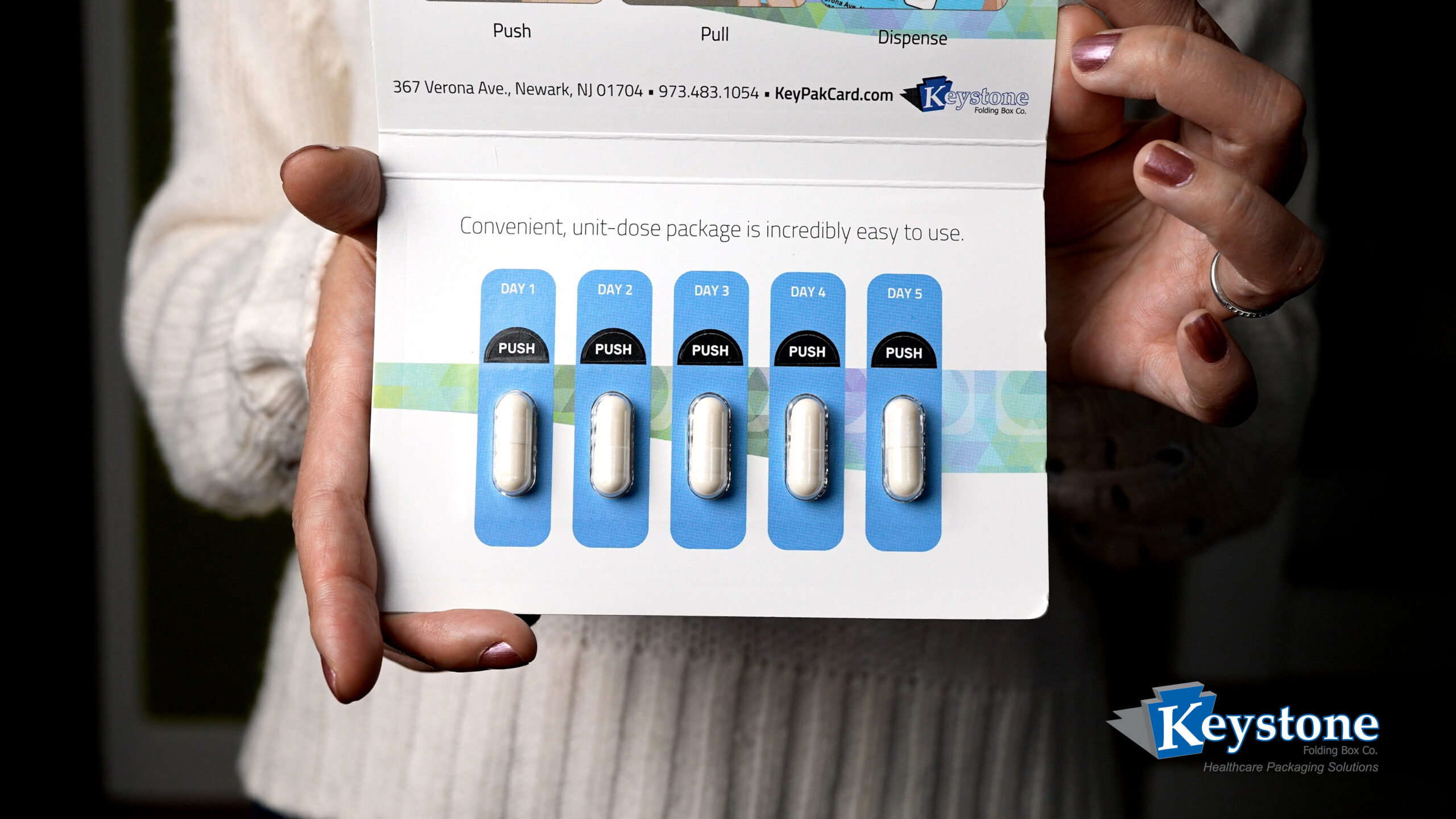
The way a patient removes medication from its package is an important part of blister packaging design. The opening sequence and dispensing mechanism should provide a clear path for accessing the medication while maintaining the intended functionality of the package.
This consideration can become particularly important for challenging dosage forms or packages intended for users who may have difficulty manipulating conventional packaging.
Child-Resistant Packaging for Pharmaceutical Products
Child-resistant requirements can influence the structure and opening mechanism of a pharmaceutical blister package.
The finished package needs to provide the required level of resistance while remaining accessible to the intended users. The package structure, opening mechanism, blister arrangement, and other components all contribute to the finished design.
Keystone offers several child-resistant pharmaceutical packaging platforms that have achieved F=1 child-resistant performance in their respective tested configurations.
Child-resistant performance applies to the specific package configuration that has been evaluated and tested. The appropriate format depends on the product, package configuration, intended users, and applicable requirements.
Keystone Blister Packaging Platforms
Keystone offers several paperboard blister packaging platforms for pharmaceutical applications, with different formats suited to different product and packaging requirements.
Key-Pak
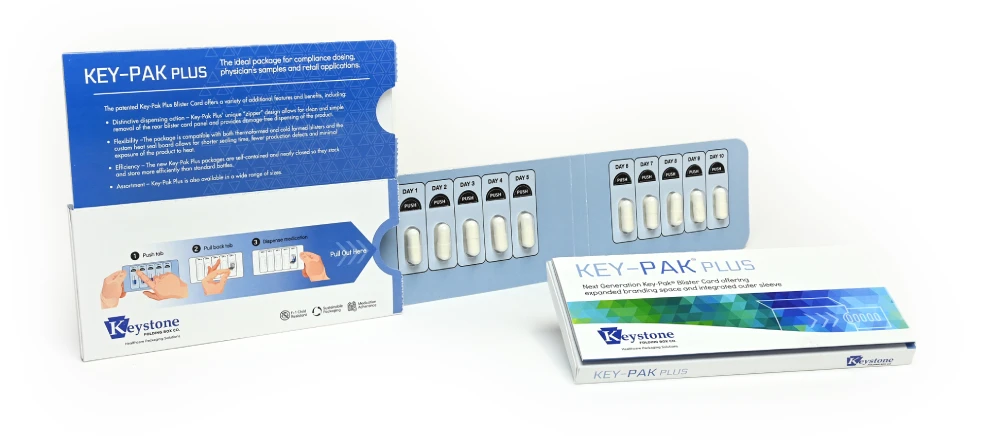
Key-Pak accommodates standard tablets and capsules as well as challenging dosage forms, including friable tablets, gel caps, and liquid-filled products. The platform is also designed for complex dosing applications, including titration regimens and multi-pill dosing. Its patented zipper design allows individual doses to be removed from the package, while its large printable area provides space for instructions and drug information.
Key-Pak Plus
Key-Pak Plus is designed for oral solid dose medications and features a calendarized blister format with a fold-out panel for additional content. Available in multiple sizes and configurations, the platform provides space for branding, multilingual labeling, patient instructions, and other package information.
Push-Pak
Push-Pak is a child-resistant blister wallet designed around a push-to-release dispensing mechanism. The format is designed for oral solid dose medications and adherence packaging applications.
EcoSlide-Rx
EcoSlide-Rx is a reclosable child-resistant paperboard package designed for use with push-through blister cards. The format provides a senior-friendly opening experience and is available for pharmaceutical applications, including clinical trials.
The appropriate platform depends on the product, dosage form, dosing regimen, patient requirements, package configuration, and intended application.
A Practical Dosage Form Packaging Checklist
Before selecting a blister packaging format, pharmaceutical teams should consider:
- What dosage form is being packaged?
- What are the product’s dimensions and physical characteristics?
- How many doses will the package contain?
- What dosing schedule does the package need to support?
- Does the product require calendarization?
- How will the patient remove each dose?
- Does the dosage form require a particular dispensing approach?
- Are child-resistant requirements applicable?
- How much space is needed for instructions and product information?
- Which blister and lidding configuration is appropriate?
- Is the package intended for clinical or commercial use?
- What manufacturing and assembly requirements need to be considered?
- Does the package need to accommodate different dose quantities or configurations?
These questions provide a practical starting point for evaluating blister packaging around the characteristics of the product and the requirements of the finished package.
Choosing a Blister Packaging Solution
Selecting a blister package begins with understanding the dosage form, dosing regimen, intended users, and requirements of the finished package. Tablets, capsules, friable products, gel caps, and liquid-filled products can each bring different considerations to the development process.
Keystone offers paperboard blister packaging platforms designed around a range of pharmaceutical applications, including solutions for standard and challenging dosage forms, complex dosing regimens, child-resistant requirements, and patient access.
Contact Keystone to discuss your pharmaceutical blister packaging requirements.
Frequently Asked Questions
Q. What pharmaceutical dosage forms can be packaged in blisters?
A. Blister packaging can be used for a range of pharmaceutical dosage forms. Keystone’s Key-Pak platform is specifically designed for standard tablets and capsules as well as challenging dosage forms including friable tablets, gel caps, and liquid-filled products.
Q. Can tablets be packaged in blister packaging?
A. Yes. Tablets are a common application for blister packaging. The blister configuration can be developed around the tablet’s size, shape, dose quantity, and dosing regimen.
Q. Can capsules be packaged in blister packaging?
A. Yes. Keystone’s Key-Pak platform is designed for standard capsules as well as challenging dosage forms such as gel caps and fragile capsules.
Q. Can fragile or friable tablets be blister packaged?
A. Yes. Keystone specifically identifies friable tablets as a challenging dosage form that can be accommodated by Key-Pak. Its dispensing design is intended to allow clean removal of individual doses.
Q. Can liquid-filled products be packaged in blisters?
A. Keystone identifies liquid-filled products among the challenging dosage forms that can be accommodated by Key-Pak. The specific package configuration should be evaluated around the product and packaging requirements.
Q. Does dosage form affect blister cavity design?
A. Yes. The physical characteristics of the dosage form can influence the size and configuration of the blister cavity, as well as how the finished package is designed for dispensing.
Q. Can blister packaging support complex dosing regimens?
A. Yes. Keystone’s Key-Pak platform is specifically positioned for titration regimens and multi-pill dosing. Key-Pak Plus also incorporates calendarized blister packaging for applications where dose organization is important.
Q. Can pharmaceutical blister packaging be child-resistant?
A. Yes. Keystone offers several child-resistant blister packaging platforms, including Key-Pak, Key-Pak Plus, EcoSlide-Rx, and Push-Pak. Child-resistant performance applies to the specific package configuration that has been tested and evaluated.
Latest Articles
While Keystone continues to be a leader in the manufacturing and design of paperboard packaging, they are also a design center and source for non-paperboard packaging components. To learn more about Keystone Folding Box Company, please contact Ward Smith at Keystone Folding Box Company, at (513) 871-4747, ward.smith@keyboxco.com or visit www.keyboxco.com.