

How Clinical Trial Packaging Differs From Commercial Pharmaceutical Packaging
TL;DR:
- Clinical trial packaging shares core safety standards with commercial packaging but serves a different purpose
- Calendarization and dosing clarity support both patient compliance and study accuracy during a trial
- Electronic compliance monitoring can turn packaging into a source of real-time adherence data
- Choosing the right format for a clinical study can carry forward into commercial packaging decisions later
Packaging decisions made during a clinical trial don’t exist in isolation. The format a sponsor chooses has to meet the same safety expectations as a commercial product while also supporting the data collection and patient compliance goals specific to a study. Keystone offers packaging solutions built specifically for clinical trial use, alongside its broader line of commercial pharmaceutical packaging, giving sponsors a way to think about both stages from the start.
What Stays the Same Between Clinical and Commercial Packaging
Child-resistant performance doesn’t change based on what stage a product is in. Keystone’s clinical trial packaging is designed with the same F=1 child-resistant rating, the highest possible, that’s expected of commercial pharmaceutical packaging, meeting Consumer Product Safety Commission requirements regardless of whether a product is in trial or already on the market.
This consistency matters for sponsors planning ahead. A packaging format that performs reliably during a clinical trial and meets the same safety standards as its commercial counterpart can reduce the unknowns when a product eventually moves toward commercialization.
Where Clinical Trial Packaging Has Its Own Priorities
A clinical trial depends on more than the drug itself, it depends on patients taking the right dose at the right time, and on sponsors being able to demonstrate that they did. This is where clinical trial packaging takes on a role that goes beyond protection and safety.
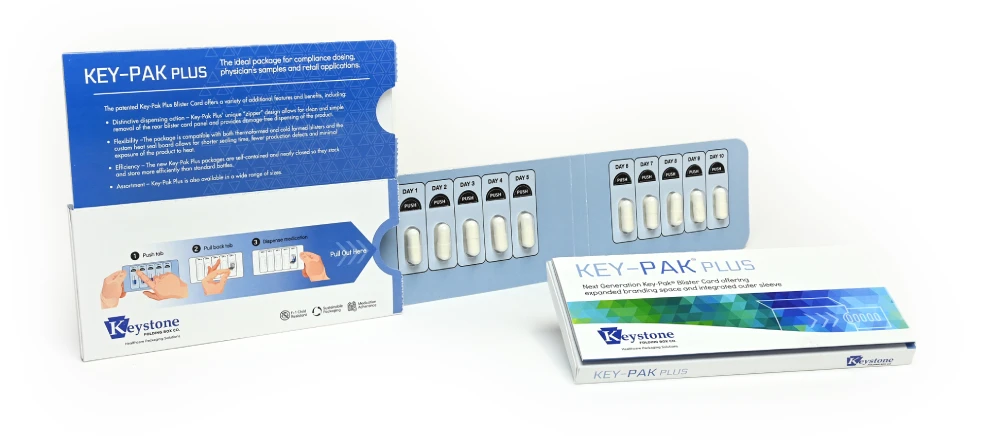
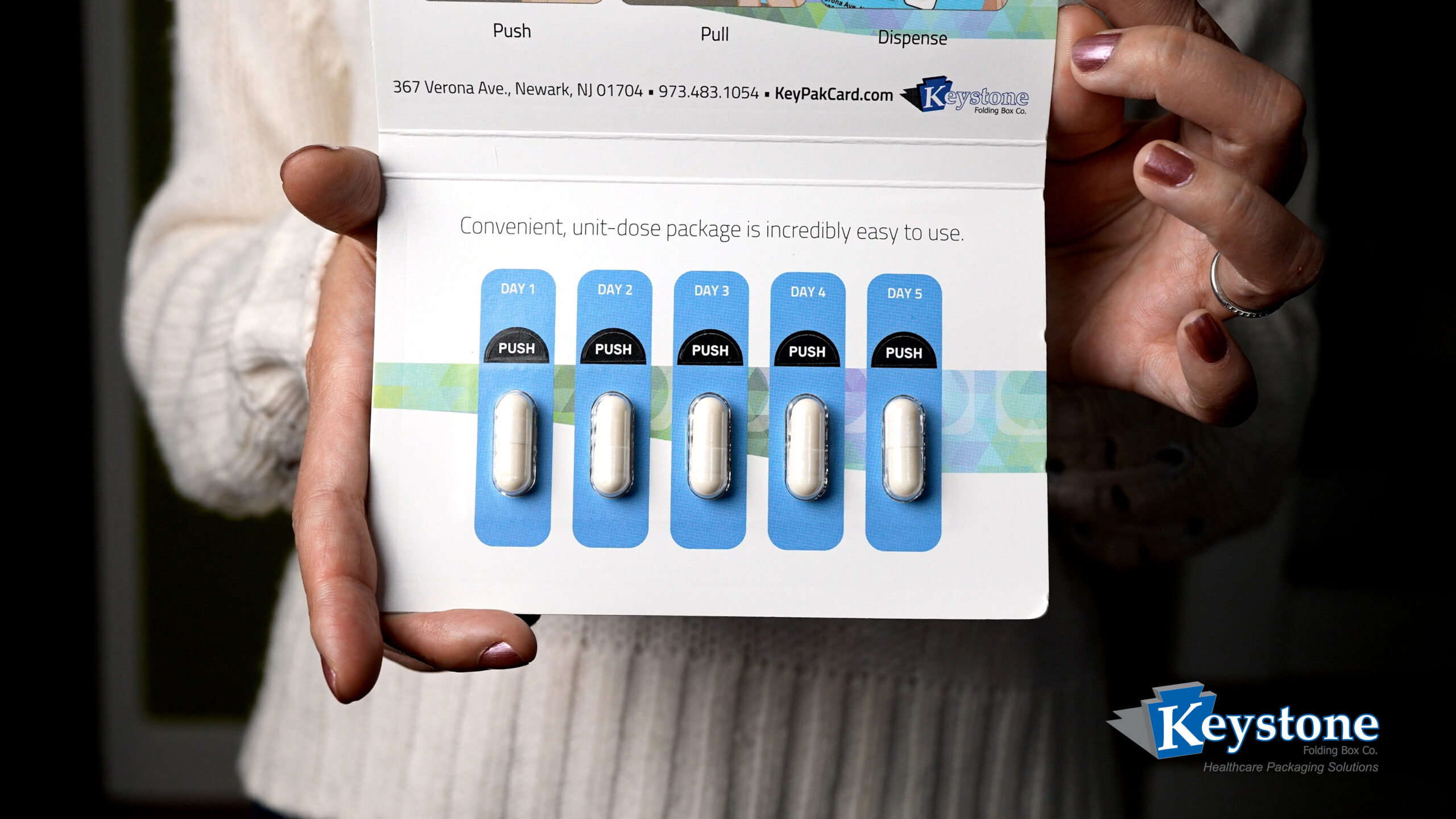
Key-Pak’s F1 Wallet Card is built with a large billboard area for instructions, helping patients follow dosing schedules clearly throughout a study. Its flexible design works with a range of blister and lidding materials, making it adaptable to the specific needs of a given trial. Ecoslide-RX’s Reclosable CR Pack takes a different approach, its secure but easy-to-open design has made it one of the most widely used CR packaging formats in clinical trials, and its scalable structure can accommodate different pill quantities, sizes, and shapes as a study’s requirements evolve.
Calendarization features appear across these formats as well, helping patients track which dose corresponds to which day or time. For a study, this isn’t just a convenience, it’s part of how dosing accuracy gets built into the packaging itself.
Turning Packaging Into a Source of Trial Data
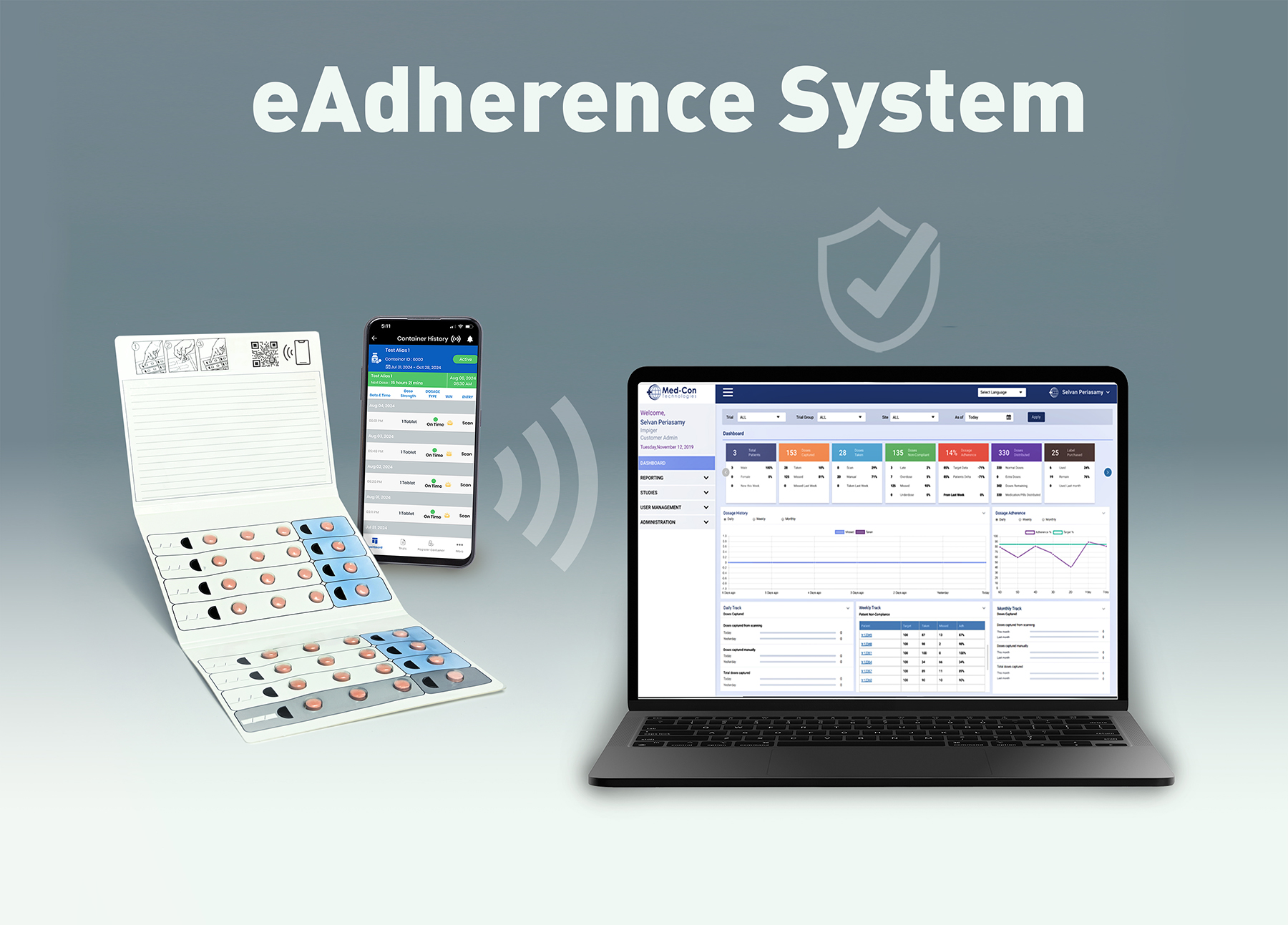
Patient-reported dosing diaries have long been part of how clinical trials track adherence, but they rely on patients to accurately recall and report their own behavior. Keystone has worked with sponsors since 2005 to bring electronic compliance monitoring directly into packaging as an alternative.
Both Key-Pak and Ecoslide-RX blister formats can incorporate an embedded electronic module and printed sensor grid, developed in collaboration with Information Mediary Corporation, that records the time, date, and location when a dose is removed from the package. This technology remains invisible to the patient, and the data can be retrieved wirelessly for analysis. Real-time adherence data captured this way carries more weight in discussions with the FDA than diary-based reporting, giving sponsors a more objective picture of how a therapy is actually being used during a trial.
Why This Connects Back to Commercial Packaging Decisions
A format that performs well during a clinical trial, in terms of child resistance, dosing clarity, and patient ease of use, often becomes a strong candidate for the commercial version of that product. Key-Pak and Ecoslide-RX exist in both clinical and commercial forms for this reason, allowing a packaging format proven during a study to carry forward into commercial production with the same underlying structure.
This continuity can reduce the redesign work needed when a product moves from trial to market, since the packaging’s core performance has already been demonstrated with real patients under real conditions.
Frequently Asked Questions
Q: Does clinical trial packaging need to meet the same safety standards as commercial packaging?
A: Yes. Child-resistant performance, including F=1 ratings, applies to both clinical trial and commercial pharmaceutical packaging.
Q: What is electronic compliance monitoring in clinical trial packaging?
A: It’s a technology embedded in blister packaging that records when a dose is removed, including the time, date, and location, providing real-time adherence data that can be retrieved wirelessly.
Q: Why does real-time adherence data matter for clinical trials?
A: It offers a more objective record of patient dosing behavior than diary-based self-reporting, which can carry more weight in FDA discussions.
Q: Can a packaging format used in a clinical trial also be used commercially?
A: Yes. Formats like Key-Pak and Ecoslide-RX are available in both clinical trial and commercial versions, allowing the same underlying design to carry forward.
Planning Packaging for Your Next Clinical Study
Choosing a packaging format for a clinical trial is also an early step toward commercial packaging decisions down the line. Connect with the Keystone team to discuss packaging solutions that support your study’s compliance goals and your product’s path to market.
Latest Articles
While Keystone continues to be a leader in the manufacturing and design of paperboard packaging, they are also a design center and source for non-paperboard packaging components. To learn more about Keystone Folding Box Company, please contact Ward Smith at Keystone Folding Box Company, at (513) 871-4747, ward.smith@keyboxco.com or visit www.keyboxco.com.